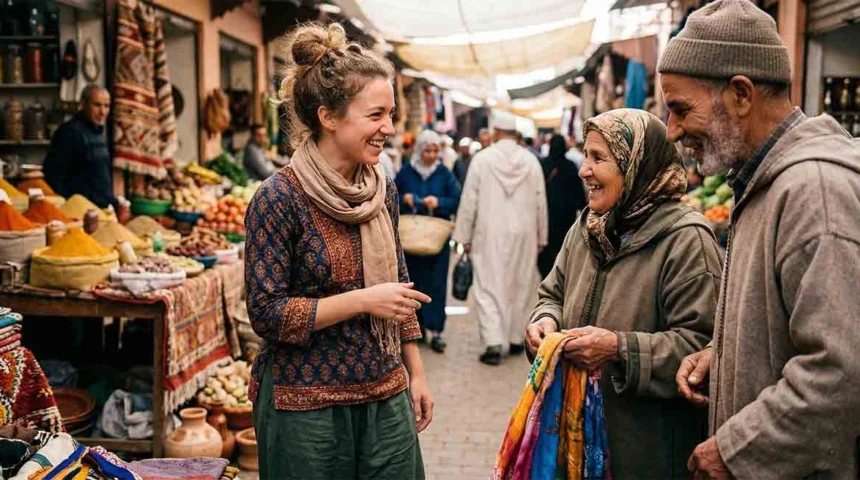
You’ve heard the stereotypes. Loud American tourists. Culturally oblivious American tourists. But is the perception of Americans abroad actually as bad as the stereotype suggests? And how much does it vary by country?
The honest answer is more nuanced than either “everyone loves Americans” or “everyone hates us.” Here’s the real picture — by region and by what actually drives local attitudes.
What Polling Actually Shows
Pew Research Center’s Global Attitudes Survey regularly tracks how Americans are perceived internationally. The pattern is consistent: attitudes toward Americans as individuals tend to be significantly more positive than attitudes toward U.S. foreign policy. In most countries, the majority of people distinguish between “Americans” and “the American government” — and the former is generally viewed more favorably.
In practical terms: most people in most countries do not dislike you. They may have complicated feelings about U.S. policy, but they’re generally not extending that to the individual tourist asking for restaurant recommendations.
Reception by Region
Europe: Varies significantly by country and by which Americans they’ve encountered. Western European countries with high tourist volume (France, Spain, Italy) have mixed feelings — they’ve seen enough of every kind of tourist to have a calibrated view. Northern Europe (Scandinavian countries, Netherlands) tends to be straightforwardly welcoming. UK is generally positive with familiar cultural dynamics.
Latin America: Despite complicated historical relationships with U.S. policy, most Latin American countries receive individual American tourists warmly. Cultural warmth is generally high — hospitality is deeply embedded in most cultures in the region.
Japan and South Korea: Both countries tend to receive American tourists positively, with genuine cultural curiosity about Americans. Politeness norms are high in both countries, which means you’ll be treated cordially regardless.
Southeast Asia (Thailand, Vietnam, Indonesia, etc.): Tourism economies are well-adapted to Western travelers and tend to be commercially welcoming. Vietnam is particularly notable — despite the history, Vietnamese people are frequently described by travelers as among the most genuinely welcoming in the world.
Middle East: Varies by country. Countries with established tourism economies (UAE, Jordan) are quite welcoming of American tourists. Others require more research and context-sensitivity.
American Tourist Behaviors That Annoy Locals
These are based on consistent patterns reported in travel communities and studied by tourism researchers — not stereotypes applied to all Americans, but real behaviors that create friction:
- Speaking loudly in quiet public spaces — Parks, restaurants, museums. Most cultures have more restrained norms about public volume than American culture does.
- Expecting English without making any effort. Even a single word of the local language — “thank you,” “hello,” “please” — changes how you’re received.
- Tipping confusion — In many countries, tipping is not expected or is even considered rude. Americans who tip enthusiastically are sometimes seen as disruptive to local service culture.
- Treating service workers as invisible — More pronounced in some travelers than others, but a genuinely noted pattern.
- Expressing surprise that things are different — “Why do they do it this way?” said with audible bafflement reads as arrogance.
Where Americans Are Most Genuinely Welcomed
Countries where American travelers consistently report feeling genuinely embraced (not just commercially tolerated): Ireland, Japan, Portugal, Vietnam, Jordan, Colombia (in tourist areas), Albania (surprisingly — warm culture + genuinely rare to see American tourists = enthusiastic reception), and most of the Caribbean despite some political undercurrents.
How to Be a Welcomed American Traveler Anywhere
- Learn 10 words of the local language. Hello, goodbye, please, thank you, excuse me, I’m sorry, yes, no, how much, and where. That’s it. The effort alone transforms most interactions.
- Observe before participating. Spend 10 minutes in any new context just watching how locals behave before inserting yourself into it.
- Eat where locals eat. This is both better food and better human interaction. Tourist-facing restaurants adjust everything to your expectations. Local spots are the actual experience.
- Express genuine curiosity about the place. Not “how does this compare to home” but actual interest in what makes this place itself.
Leave a Reply