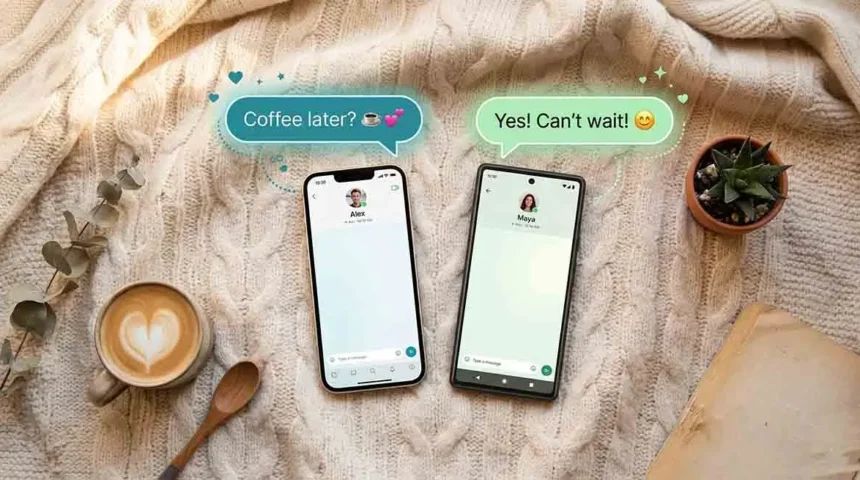
You’ve been seeing someone for three weeks. You text every day. Sometimes multiple times. You’re not sure if this is normal or whether you’re the anxious one or they are. And you can’t ask them because asking feels like it would be weird.
The internet will tell you definitively: “Yes, too much” or “No, it’s fine.” Both are wrong. Here’s the actual framework that works.
There Is No Universal Rule — Here’s Why
The amount of texting that’s “right” in a new relationship depends entirely on: both people’s communication preferences and styles, whether the texting is reciprocally initiated and received, whether the content is substantive versus compulsive, and whether the texting is enhancing or substituting for in-person connection.
Daily texting between two people who both enjoy it and communicate naturally through text is completely healthy. Daily texting where one person is anxiously checking for responses and feeling destabilized by reply timing is not — regardless of frequency.
The frequency isn’t the variable that matters. The relationship to the frequency is what matters.
What Healthy Texting Patterns Look Like
- It feels natural, not effortful. You text because something reminded you of them or because you have something to say — not because you haven’t texted in X hours and feel like you should.
- It’s reciprocally initiated. Both people start conversations. The pattern isn’t consistently one person reaching out and the other responding.
- Reply timing is not a source of anxiety. You can send a message and not think about whether they’ve seen it yet. Their response time doesn’t determine your emotional state.
- It supplements in-person time rather than substituting for it. Texting maintains connection between dates. It doesn’t replace the building of genuine intimacy through shared experience.
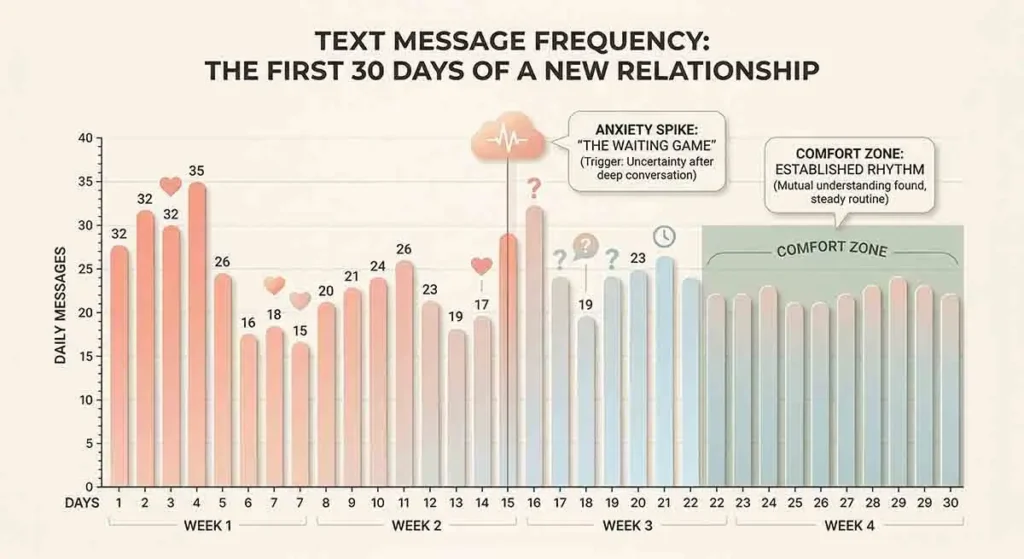
Patterns That Signal Anxiety or Insecurity
- Sending multiple follow-up messages when there’s no immediate reply
- Interpreting reply tone and timing as indicators of their feelings toward you
- Calibrating your own replies strategically (waiting a certain amount of time to reply “so you don’t seem desperate”)
- Feeling relief when they text and anxiety when they don’t — using texting as an anxiety regulation tool
- Using texting to have relationship conversations that would be better in person — avoiding the vulnerability of direct communication by mediating it through screens
These patterns aren’t about frequency. They’re about the emotional function texting is serving. If texting is serving anxiety management rather than communication, frequency reduction doesn’t fix it — it just changes the interval at which the anxiety manifests.
What to Do When Your Texting Styles Don’t Match
This is very common in new relationships and almost always manageable. The mismatch is usually: one person texts frequently and conversationally; the other uses text functionally (logistics, brief check-ins) and doesn’t maintain running text conversations.
Neither style is wrong. The direct approach works best: “I’ve noticed I tend to text more than you do — is that working for you, or would you prefer I save things for when we’re together?” This is a completely normal adult question and most people receive it with relief rather than alarm.
How to Calibrate Without Seeming Calculated
The best texting calibration is to let your natural communication style lead and adjust based on clear feedback — not strategic management. If someone consistently takes 8 hours to reply, they’re probably not a high-frequency texter. Match their apparent preference without making it a performance.
If you’re genuinely uncertain: the first month of a relationship is primarily a compatibility assessment period. How someone communicates between dates is part of the compatibility data. You’re not managing it — you’re observing it.


Leave a Reply