
You’ve been doing this thing with someone for eleven months. It’s not nothing. It might be everything. But you’ve never defined it, and every time you get close to the conversation, something redirects. And here you are, almost a year later, in the same unclarified place you started.
Situationships endure. Often longer than relationships that had actual definition and commitment. This seems paradoxical — and understanding why it happens is the key to deciding what to do about yours.
What Makes a Situationship Different from a Relationship
A situationship has the emotional and physical components of a relationship — consistent time together, genuine affection, often physical intimacy, mutual reliance — without the explicit commitment that defines a relationship. Crucially, it lacks the conversation: the explicit mutual agreement about what this is, what it means, and what both people are and are not doing with other people.
This is different from casual dating, which both parties understand to be casual. In a situationship, at least one person has feelings that exceed casual, and both parties are aware that something is happening — but the definition has been implicitly or explicitly avoided.
Why They Endure: The Psychology of Ambiguity
Ambiguity is both the problem and, paradoxically, the preservative mechanism of situationships. Here’s why:
Ambiguity prevents the termination conversation. To end a situationship, you have to name it — which means acknowledging it exists more fully than comfortable. Many people find it easier to maintain the undefined arrangement than to have the explicit conversation that would be required to end it.
Hope is maintained by undefined possibility. In a defined relationship, either it’s good or it ends. In a situationship, the undefined nature keeps the possibility of more alive indefinitely. The person who wants more can maintain hope without risking the rejection of asking for it. The person who wants less can maintain the connection without making the commitment it would require.
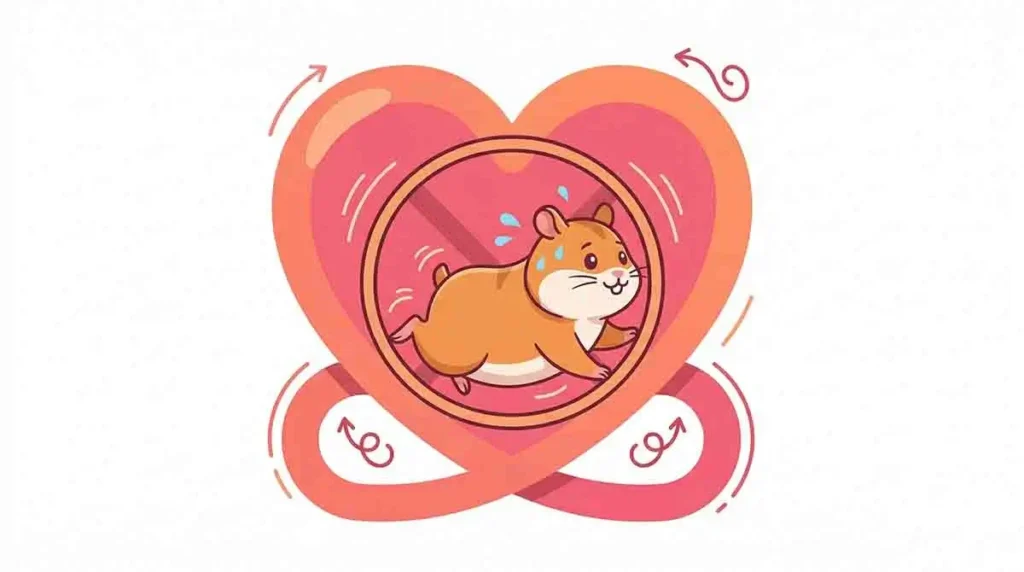
Intermittent reinforcement: Situationships frequently involve irregular contact and affection — intense connection periods followed by distance. Intermittent reinforcement (receiving what you want unpredictably rather than consistently) produces stronger emotional attachment than consistent reward, which is why these arrangements can generate such powerful feelings even in the absence of genuine security.
What Both People Are Getting From It
Situationships persist because they meet real needs for both parties, imperfectly but consistently:
- The person who wants more gets connection, affection, and the hope of eventual definition — without the vulnerability and risk of asking for it explicitly.
- The person who wants less (or who isn’t sure) gets intimacy, company, and emotional support without the obligations of commitment — without having to make a decision about something they’re genuinely uncertain about.
Both people are getting something real. Neither is getting everything they need. The arrangement continues as long as what they’re getting seems worth the cost of what they’re not.
What It Costs Each Person
For the person wanting more: deferred honesty with themselves, time that isn’t being used to find an actual partner, the psychological cost of sustained hope in an ambiguous situation, and often a gradual erosion of self-worth from repeatedly not asking for what they want.
For the person wanting less: genuine connection that they’re not fully investing in, possible harm to someone they do care about, and often the avoidance of real self-knowledge about what they actually want from their life and relationships.
The Two Ways Situationships End
Almost all situationships end in one of two ways:
- The DTR (define the relationship) conversation: One person finally asks directly. The answer is either yes (this becomes a relationship) or no (this ends). This is the only clean resolution and it requires someone to accept the risk of rejection.
- Gradual fade-out: One person gradually becomes less available — usually because they’ve started dating someone else or simply reached their limit. The situationship ends without an explicit conversation, which leaves the other person with less closure.
If you’re in a situationship and you want to know where you stand: the question to ask yourself is not “how do I get them to commit?” but “am I willing to have the honest conversation and accept the answer, whatever it is?” If not, the situationship will continue exactly as it is.



Leave a Reply