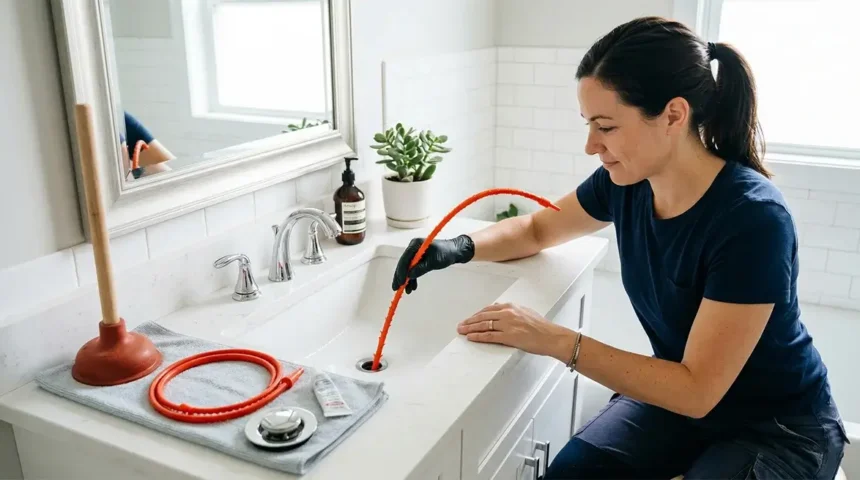
A clogged drain is one of the most common household problems Americans face — and one of the most unnecessarily expensive ones. A plumber call for a simple drain clog averages $150–$300 in 2026. In the vast majority of cases, the clog is reachable and fixable with tools you either already own or can buy for under $30. Here is the complete guide to unclogging every drain in your home.
Understanding Why Drains Clog
Different drains clog for different reasons, and knowing the cause tells you the right fix. The most common culprits by drain type:
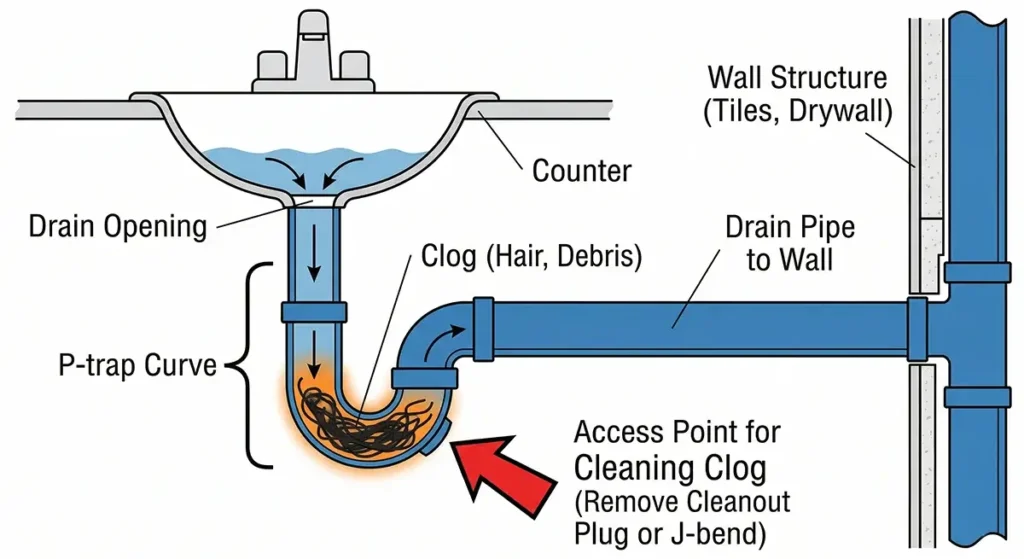
- Bathroom sink: Almost always hair and soap scum combined. The P-trap — the curved pipe section directly under the sink — is usually where the clog lives.
- Shower and bathtub: Hair, primarily. Shower drain clogs are almost always within 6 inches of the drain opening.
- Kitchen sink: Grease, food particles, and soap scum buildup. Kitchen clogs tend to be further down the pipe than bathroom clogs.
- Toilet: Excessive toilet paper, non-flushable wipes, or foreign objects. Toilet clogs are almost always in the toilet’s internal trap — not in the larger drain line.
This matters because the correct tool depends on what is causing the clog. A plunger will not help a hair clog that needs mechanical extraction. A drain snake will not dissolve a grease buildup that needs enzymatic treatment.
Bathroom Sink Drains — Step by Step
Method 1: Check and Clean the Stopper (Try This First)
Most bathroom sinks have a pop-up stopper — the small dome-shaped plug you push down to fill the sink. These stoppers collect hair and soap scum on their underside and are the cause of the majority of slow bathroom sink drains. The fix takes 60 seconds:
- Pull up the stopper. Many simply lift out; others require a slight twist and pull. If it does not come out freely, reach under the sink and look for a horizontal pivot rod connected to a vertical clevis strap — squeeze the clip and remove the pivot rod to free the stopper.
- Remove the hair and buildup from the stopper and the opening below it. It will be unpleasant. A paper towel works better than your hand for this.
- Run hot water for 60 seconds. In most cases this completely resolves a slow bathroom sink drain.
- Replace the stopper. Done.
Method 2: Use a Drain Hair Tool
A Zip-It or similar flexible plastic drain-cleaning tool ($3–$5 at any hardware store) is the best tool for bathroom sink and shower drain clogs. It has barbs that grab hair and pull it out of the drain. Insert it, rotate and push down 6–8 inches, then slowly pull up. Repeat 2–3 times. Remove the extracted material and run hot water.
Method 3: Clean the P-Trap
If methods 1 and 2 do not resolve the clog, the blockage is in your P-trap — the curved pipe section under the sink. This looks intimidating but takes about 10 minutes:
- Place a bucket under the P-trap to catch water.
- The P-trap has slip-joint nuts at each end — unscrew them by hand (counterclockwise). They should turn without tools. If they are too tight, use channel-lock pliers gently.
- Remove the P-trap and empty it into the bucket. The clog will almost certainly be visible as a dark buildup inside the curve.
- Clean it out with a brush or by running water through it from the sink side.
- Reinstall and tighten the nuts hand-tight plus a quarter turn. Do not overtighten or you will crack the plastic.
Shower and Bathtub Drains
Shower Drains
The shower drain clogs are 95% hair-related and 95% within 6 inches of the drain opening. This makes them the easiest drain to unclog in your home.
- Remove the drain cover. Most unscrew with a standard screwdriver; some simply pop off.
- Look inside with a flashlight. You will almost certainly see a hair clog immediately.
- Use needle-nose pliers, a Zip-It tool, or even a wire coat hanger bent into a hook to extract the hair mass. Rotate and pull slowly — the hair clog often comes out in one satisfying piece.
- Run hot water for 2 minutes to flush any remaining soap residue.
- Replace the drain cover.
Bathtub Drains
Bathtub drains have a slightly more complex setup with an overflow plate and trip lever mechanism. The process is similar but the access point differs:
- First remove the drain stopper. There are several types — consult the stopper type (toe-touch, lift-and-turn, trip lever, or pop-up) and remove accordingly.
- Use a Zip-It to clear hair from the drain opening.
- If the tub still drains slowly, the clog may be past the drain opening. Use a small hand-powered drain snake (also called a drain auger) — insert it into the drain, feed it down 2–3 feet, rotate the handle, and pull back to retrieve the clog.
- For persistent bathtub clogs, also check the overflow drain (the oval plate near the top of the tub) — remove it and use a snake through that opening as it provides a more direct path to the drain line.
Kitchen Sink Drains
Kitchen clogs are grease-based, which makes them different from hair-based bathroom clogs. Mechanical tools are less effective on grease; heat and enzymatic cleaners work better.
The Boiling Water Method (Grease Clogs)
For a sink that is draining slowly but not completely blocked:
- Boil a full kettle of water.
- Slowly pour it directly down the drain in two or three stages, allowing 20 seconds between pours for the hot water to work on the grease buildup.
- Follow with hot tap water for 2 minutes.
Caution: Only use this method on metal pipes. Do not use boiling water on PVC pipes — it can soften the joints. If you have PVC (white or cream-colored plastic pipe under the sink), use very hot tap water instead.
Baking Soda and Vinegar Method
- Pour half a cup of baking soda down the drain.
- Follow immediately with half a cup of white vinegar.
- Cover the drain opening to contain the fizzing reaction inside the pipe.
- Wait 15 minutes, then flush with hot water.
- This method is more effective as a monthly maintenance treatment than as a clog cure, but it works for mild grease buildup.
Plunger for Kitchen Sinks
A cup plunger (the simple red rubber dome type) can clear kitchen sink clogs effectively. Fill the sink with 2–3 inches of water, place the plunger over the drain, and apply 10–15 firm up-and-down strokes. The pressure differential dislodges clogs that are further down the pipe.
For guidance on the environmental impact of chemical drain cleaners, the EPA’s WaterSense program provides useful information on sustainable drain maintenance practices.
Toilet Clogs
Toilet clogs fall into two categories: those in the toilet’s internal trap (fixable with a plunger) and those in the drain line beyond the toilet (require an auger). The vast majority are in the internal trap.
The Correct Plunging Technique
Most people plunge incorrectly and wonder why it does not work. The key is seal and suction — not force:
- Use a flange plunger — the type with a rubber flap that folds out from inside the bell. This creates a seal specifically designed for toilet drain openings. A flat cup plunger does not seal properly against a toilet.
- Add water to the bowl if it is low. You need enough water to submerge the plunger bell.
- Insert the plunger at an angle to let air out of the bell, then position it directly over the drain opening.
- First push: a firm, slow push to establish the seal. The first plunge should be a push, not a pull.
- Subsequent plunges: rapid up-and-down strokes maintaining the seal. Do 15–20 strokes.
- Pull up sharply on the final stroke to break the seal and pull the clog backward.
- Flush to test. If the water drains normally, the clog is cleared. If not, repeat 2–3 more cycles.
When to Use a Toilet Auger
If 15 minutes of correct plunging has not cleared a toilet clog, use a toilet auger (also called a closet auger) — a specialized tool designed to reach past the toilet trap into the drain line. Feed the cable into the drain, rotate the handle clockwise while advancing, and pull back to retrieve the obstruction. Toilet augers cost $25–$50 and pay for themselves on first use.
Chemical Drain Cleaners — What Works and What to Avoid
Chemical drain cleaners are heavily marketed but are not always the right choice. Here is the honest assessment:
- Enzyme-based cleaners (Bio-Clean, Green Gobbler Enzyme): Safe for all pipe types, effective for grease and organic buildup, good for maintenance. Not fast-acting — work over hours. Recommended for monthly maintenance.
- Liquid Drano and similar alkaline cleaners: Effective on hair clogs. Safe for metal pipes but can soften PVC joints with repeated use. Do not use in standing water that will not drain — the chemical sits in contact with the pipe. Never mix with other chemicals.
- Sulfuric acid drain cleaners (Instant Power and similar): Professional-strength and genuinely effective on severe clogs, but dangerous. Generates heat, can crack porcelain, and is hazardous to skin and eyes. For most homeowners, mechanical methods are safer and equally effective.
- What to avoid: Using any chemical cleaner repeatedly on the same drain. If a drain is chronically clogging, the problem is structural — a mechanical solution or professional inspection is needed, not more chemicals.
Prevention — How to Keep Drains Clear Long-Term
- Install hair catchers on every shower and tub drain. This is the single most effective drain maintenance action available. A $5–$10 hair catcher eliminates the vast majority of shower and tub drain clogs permanently.
- Never pour grease down the kitchen drain. Let it solidify in a container and dispose of it in the trash. One grease pour seems harmless; twenty of them over three years creates a clog that a plumber charges $250 to clear.
- Run hot water for 30 seconds after every kitchen sink use to push food particles and grease through the trap and into the larger drain line where they are less likely to build up.
- Monthly enzyme treatment: Pour an enzyme drain cleaner down kitchen and bathroom drains once a month before bed. The enzymes work overnight to digest organic buildup before it becomes a clog.
- Never flush wipes — including “flushable” ones. Flushable wipes do not break down in pipes the way toilet paper does and are a leading cause of sewer line blockages in American homes. Consumer Reports has documented that even wipes marketed as flushable cause plumbing problems at significantly higher rates than standard toilet paper.
The majority of drain clogs in American homes are preventable and fixable without professional help. A $5 hair catcher, a $3 Zip-It tool, and a proper flange plunger handle 90% of the drain problems most homeowners will ever encounter.

Leave a Reply