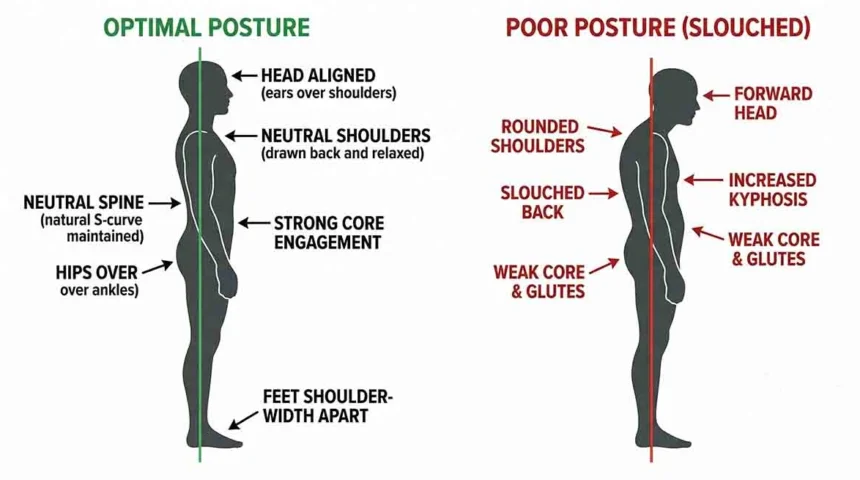
Anyone who has spent time in both the United States and Western Europe has likely noticed it — Americans sit differently, stand differently, and carry themselves differently in ways that add up to a measurable postural difference. This isn’t a stereotype without basis. Physical therapists, body mechanics specialists, and ergonomics researchers have documented consistent differences. Here’s why they exist.
The Sitting Epidemic
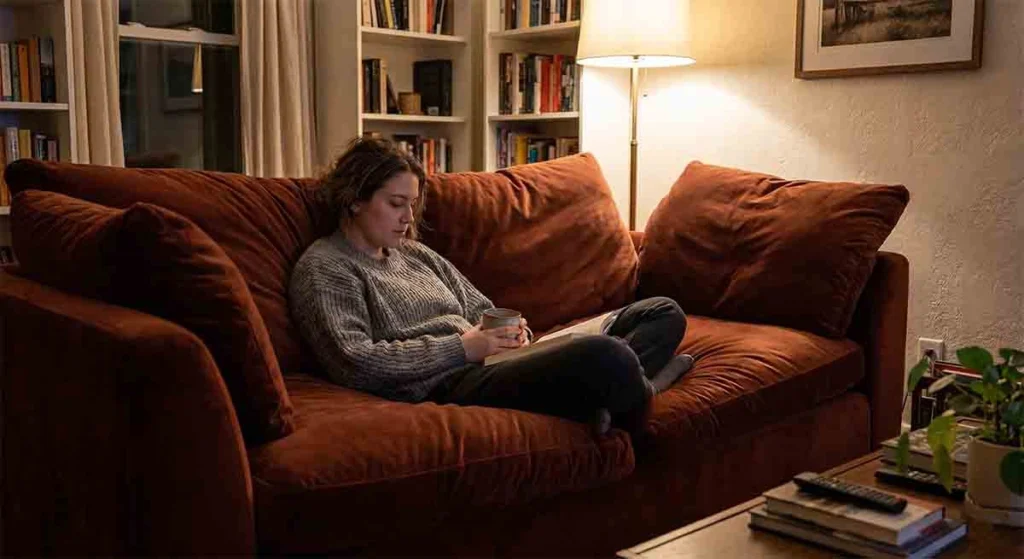
The average American adult sits for approximately 10–13 hours per day — in cars, at desks, on sofas. By global standards, this is exceptionally high. And the specific type of sitting Americans do is biomechanically problematic: deep, soft seating (cars, sofas, recliners) that allows the pelvis to tuck under and the spine to round passively rather than maintain its natural lumbar curve.
European working and commuting patterns, while also increasingly sedentary, typically involve more active sitting (harder chairs with less support — which actually encourages muscle engagement), more transit sitting (upright in trains and buses rather than car-reclined), and more interruptions to sitting through walking and stair use in more walkable urban environments.
Footwear Differences and Their Cascading Effects
American footwear culture skews heavily toward highly cushioned, elevated-heel athletic shoes — worn not just during exercise but as everyday footwear. The biomechanical effect of this is significant and often overlooked.
Elevated heels (even the modest heel-to-toe drop of a standard running shoe) tilt the pelvis forward, shorten the calf muscles and Achilles tendon, and create a compensatory adjustment up the entire kinetic chain — affecting knee angle, hip tilt, lumbar curve, and ultimately shoulder and head position. Worn every day from an early age, this produces measurably different baseline posture.
Many European walking cultures use more minimal footwear, especially for everyday urban walking — lower heel drops, harder soles, more foot feedback from the ground. These tend to produce better lower-extremity alignment, which flows upward through the entire body.
How American Furniture Is Designed Differently
American home furniture — especially sofas and recliners — is designed for comfort in a specific sense: maximum short-term physical comfort, achieved through deep cushioning and supported recline. The problem is that this design encourages postures that, over hours of daily use, train the body into chronic flexion patterns.
Contrast with the more upright seating common in European cafes, dining environments, and living rooms — often firmer, with less recline encouragement — which keeps the spine in more neutral extension even during rest. It’s less comfortable in the immediate moment. Over years, it produces better baseline posture and significantly less chronic back pain.
The Daily Walking Difference
Americans average approximately 4,000–5,000 steps per day. Europeans in walkable urban environments regularly hit 8,000–12,000 steps just through normal daily activity. This matters for posture because:
- Walking maintains hip flexor length and glute strength — both critical for pelvic positioning and lumbar support
- Walking at pace requires coordinated arm swing and trunk rotation that actively counteracts the forward-head patterns of desk and phone use
- Regular walking interrupts the prolonged static postures that allow postural muscles to atrophy
The car-dependent design of most American cities and suburbs makes this walking deficit structural rather than personal. You’re not lazy — you’re in an environment that removed the opportunity.
Practical Posture Fixes That Work
- Address sitting posture first. Sitting at 90-degree hip flexion with lumbar support maintained is the goal. If your sofa doesn’t allow this, sit forward on the front half of the cushion rather than sinking back.
- Experiment with footwear. Try reducing your heel-to-toe drop gradually — zero-drop shoes should be introduced slowly to avoid Achilles strain, but long-term they reset lower-extremity alignment positively.
- Walk more. Not as exercise — as transportation and as a posture intervention. A brisk 20-minute walk daily does more for posture than most targeted exercises.
- Phone at eye level. Forward head posture — “tech neck” — is driven by looking down at phones. Holding your phone at eye level removes the most persistent postural stressor in modern life.
- Strengthen the posterior chain. The muscles of the back, glutes, and hamstrings support upright posture. Exercises like deadlifts, rows, and hip hinges build the musculature that holds good posture without conscious effort.
- Break up sitting every 45 minutes. Standing or walking briefly resets the muscular activation patterns that sitting degrades.
“Good posture is not something you hold. It’s the result of having the strength, flexibility, and movement habits that allow your body to fall naturally into alignment.”

Leave a Reply